2026: Corporate Digital Identity as the engine of competitive advantage
As 2025 came to a close, one trend was unmistakeable: financial institutions realized the foundational role that trusted data played in their AI and transformation initiatives.
With millions poured into AI strategies, with varying degrees of success, in 2026 firms are investing time and resource in reassessing their access and approach to data, with Corporate Digital Identity (CDI) coming to the fore. What began as a solution to the KYC compliance challenge has evolved into something far more strategic. CDI is a foundation for AI transformation, scalable growth, and stronger, more profitable client relationships.
Over the past year, we have seen a fundamental shift in how organizations approach Know Your Customer (KYC) and Anti-Money Laundering (AML). Leading institutions are no longer focussed solely on meeting regulatory requirements. Instead, they are recognising that seamless, well designed KYC is a powerful indicator of the service clients can expect throughout the relationship[By investing in trusted data and robust processes, banks can meet regulatory requirements while also driving efficiency, enabling automation, reducing friction and strengthening client engagement. The result not only satisfies regulators but actively builds trust and long-term value for both the institution and its clients.
Now, as we move into 2026, the gap between institutions that view CDI as the competitive advantage, and those that still treat KYC as an operational necessity, is widening at pace.
From fragmented operations to intelligent, connected ecosystems
Disconnected teams, inconsistent data, and duplicated processes do more than increase risk. They slow growth, damage client experience and prevent institutions from scaling.
The institutions that will pull ahead are those that commit to:
- Simplifying complexity without weakening controls
- Moving from siloed functions to unified, data-driven ecosystems
- Embedding AI responsibly and at scale
- Creating a solid foundation of trusted, reuseable client data
- Achieving straight-through processing (STP) via standardization and automation
- Using compliance and corporate identity as sources of resilience, trust, and commercial advantage
CDI as the competitive advantage
CDI is the connective layer that resolves fragmented data and enables end-to-end transformation. By enabling secure, permissioned data sharing between banks and corporates, CDI provides a real-time, trusted view of a corporate’s identity, including ownership structures, key documents, and ongoing changes across both public and privately held sources.
As Doris Honold, Chair of the Encompass Executive Advisory Board, describes it, CDI has become “the foundation for collaboration across the industry.”
Institutions that establish a robust CDI framework can:
- Eliminate duplication and accelerate onboarding
- Create a single, trusted client view across the enterprise
- Strengthen client relationships through transparency and reduced friction
- Reduce operational risk while unlocking scalability
- Enable perpetual KYC (pKYC) and intelligent AI-driven automation
From strategy to measurable impact
The shift from fragmented operating models to automated, data-driven ecosystems is no longer theoretical. In 2025, institutions using Encompass solutions translated these strategies into measurable outcomes.
A Tier 1 bank reported a 90% reduction in manual onboarding steps, with up to 35% of client cases processed through full automation. Elsewhere, a multinational bank reduced onboarding times from weeks to days, while a global bank achieved up to a 66% reduction in client wait times . Client engagement also improved, with an institutional bank running an automation pilot seeing a marked increase in proactive client outreach.
These results demonstrate how trusted CDI and automation directly support growth, client satisfaction, and operational scalability.
AI moves from experimentation to execution
In 2026, AI will move decisively from isolated pilot to embedded, enterprise-wide capability. Agent-based AI systems, powered by clean, real-time CDI data, will orchestrate complex, multi-step KYC and AML processes autonomously.
Key capabilities will include:-
- Autonomous case progression
- Automated data gathering and enrichment
- Intelligent triage and prioritization
- Consistent, rules-based assessments
- Proactive escalation with human-in-the-loop (HITL) oversight
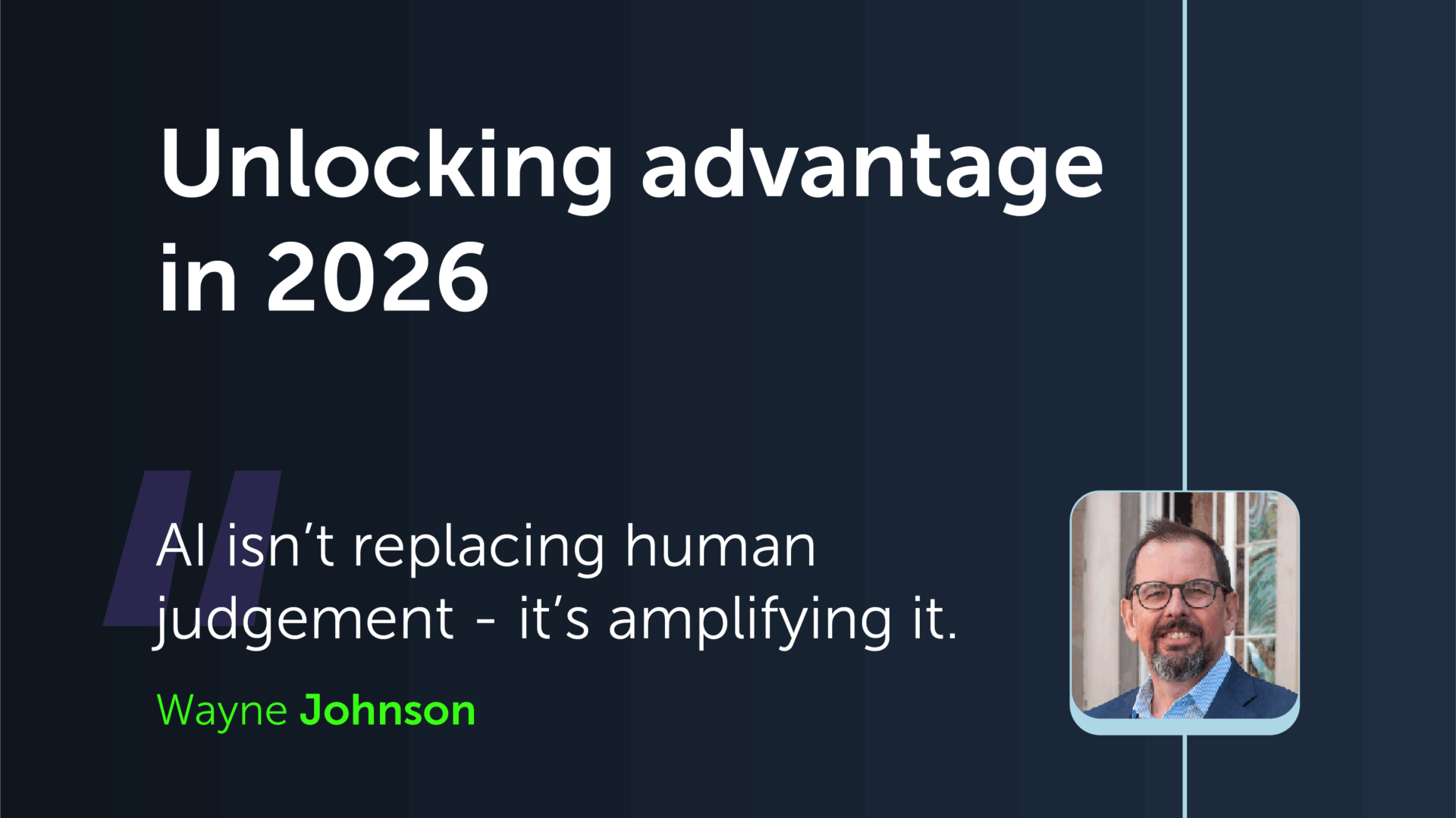
AI does not replace human judgement, it amplifies it. By taking on high-volume, low-judgement activity, AI enables specialists to focus on the nuanced, complex, relationship-driven, and high-impact decisions that truly differentiate institutions.
Explainability, trust and accountability at scale
As AI becomes further embedded across the client lifecycle, regulators, boards, and clients alike will expect, and demand, transparency, and accountability.
Institutions will require:
- Clear data lineage, tracing every automated outcome back to its source
- Standardized decision logic to ensure consistency
- Built-in human oversight
- Full auditability, ensuring every step is
Perpetual KYC as a growth enabler
Periodic KYC reviews will no longer be sufficient in a real-time economy. Leading institutions will adopt pKYC models, continuously assessing risk using real-time client data, behavioral signals, and external intelligence.
CDI underpins this approach, ensuring pKYC is accurate, actionable, and proactive.
Build vs Buy: Accelerating transformation through partnership
As expectations rise, institutions will increasingly outsource non-core, highly specialized capabilities, especially where AI governance, real-time entity resolution and cross-jurisdictional scale are required.
Outsourcing allows institutions to:
- Accelerate AI and digital transformation
- Reduce operational and technical burden
- Access world-leading RegTech expertise
- Focus internal resources on client value and strategic differentiation
Client experience, redefined
These shifts are fundamentally reshaping client expectations. Seamless, personalized digital journeys that balance speed, trust and transparency will become the norm.
Institutions that leverage governed AI, CDI and pKYC to tailor interactions, without compromising security or compliance, will be best positioned to retain and grow and deepen client relationships in an increasingly competitive market.
Encompass: Your strategic partner for 2026 and beyond
As we move into 2026, Encompass remains committed to helping institutions build the operational, data and AI foundations required for long term success.
By embedding CDI, standardization, explainable AI, and automation across the enterprise, we help financial institutions:
- Reduce cost and complexity
- Enable scalable, governed AI
- Strengthen client trust and engagement
- Improve operational resilience
- Unlock straight-through processing at scale
With collaboration at every level, Encompass empowers organizations not only to meet regulatory expectations, but to execute their broader growth strategies, turning trusted corporate digital identity into a catalyst for efficiency, innovation, and lasting client value.
Author: Wayne Johnson
Wayne co-founded Encompass in Sydney and took the Encompass product to market there in 2012. Since then, as CEO he has led the international expansion of Encompass, including the launch in the UK in 2015 and Singapore in 2018, and recognition as one of the UK's most influential RegTech firms. Prior to Encompass, Wayne was co-founder and CEO of Software Associates, until the company's successful exit to a Hong Kong listed Company.

You also might be interested in
 Blog
Blog The 90% signal: Why Perpetual KYC is replacing legacy compliance
Discover how pKYC replaces outdated review cycles with continuous, intelligence-led oversight. Webinar
 Accelerating AI: The Role of Corporate Digital Identity
Join ING, Capgemini and Encompass on 22 April to discuss how CDI is accelerating AI in banking. Blog AMLA explained: what the EU’s new Anti-Money Laundering Authority means for banks and compliance teams
AMLA: the EU’s new AML authority reshaping supervision, enforcement, and cross-border compliance. Video
Video EC Review
Learn how EC Review helps financial institutions reduce risk by updating client data, fast.
west
east
Discover corporate digital identity from Encompass

Accelerating AI: The role of Corporate Digital Identity

22 Apr | 1400 BST | 0900 EDT | 1500 CEST