
The race is on for banks to win corporate treasurer business
In 2024, 73% of corporate treasury professionals reported dissatisfaction with their KYC experience. By 2026, that figure had reached 95%. This is not a vocal minority, instead, it reflects an environment in which KYC processes are routinely impeding business decisions they were designed to protect.
The deterioration has been steady and consistent across three years of measurement. That trajectory matters. It signals a structural problem, not a cyclical one.
The revenue and relationship cost
The impact on corporate clients is not abstract:
- 99% report revenue lost from onboarding delays – up 13% since 2024
- 97% say KYC administration diverts their teams from higher-value strategic work
For banks, these are leading indicators of relationship health. Delayed onboarding means delayed revenue activation. Treasury capacity absorbed by document management means your relationship teams are competing for attention against administrative overhead.
Loyalty is eroding – and clients are acting on it
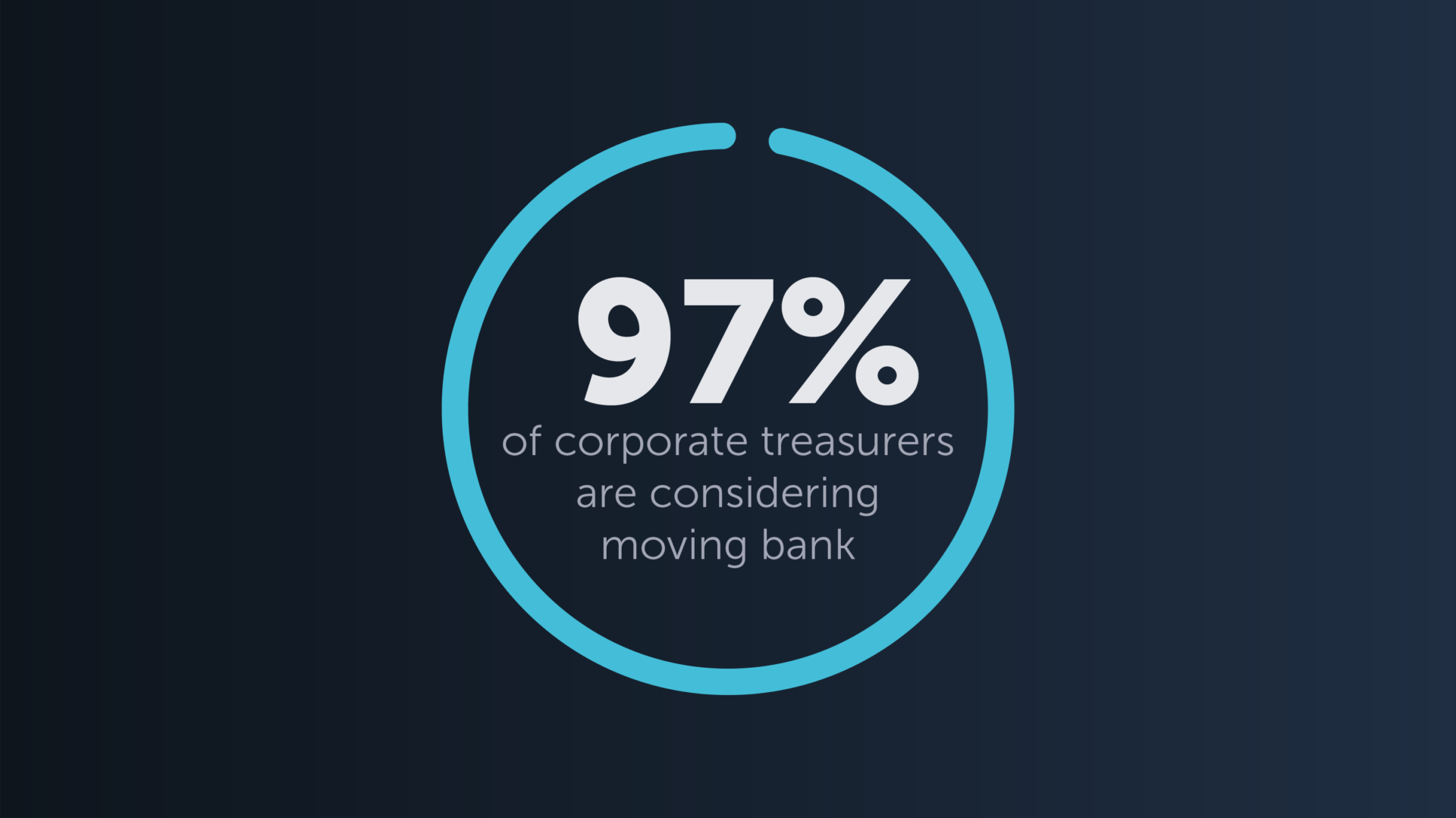
- 97% of organizations are considering switching banks due to KYC friction
- 96% have already abandoned a bank application at some point
Each abandoned application is a facility not activated, a product not deployed, a relationship that stalled before it began.
Historically, the complexity of switching banking relationships acted as a natural retention buffer. That buffer is thinning, because, when clients absorb enough friction, the calculus shifts: the disruption of leaving starts to look more manageable than the ongoing cost of staying.
Furthermore, banks that continue to treat KYC as a compliance cost center, rather than a client experience and retention variable, are mispricing the risk sitting in their corporate book.
The architecture problem banks need to own
The root cause is not intent. Most banks want to onboard clients efficiently. The problem is architecture.
Corporate clients are providing the same documentation repeatedly, to different institutions, different business lines, and in many cases to different teams within the same bank. As a result, data is fragmented across systems, only renewed episodically, and reconciled manually.
At a time when all banks are looking to leverage AI to improve client experience, ineffective processes and poor data are detrimental to sustainable success.
Security concerns among corporate treasury teams have risen from 83% in 2024 to 92% in 2026. A rational response to an environment in which sensitive organizational data is distributed across multiple contact points with limited visibility.
What a bank-side solution looks like
EC360 is built for exactly this. It gives banks a centrally orchestrated view of corporate client KYC data. Seamlessly automating the collation of data and documents in real-time to eliminate the manual cycles that slow onboarding, burden compliance teams, and erode client experience.

Rather than collecting data episodically and storing it in silos, EC360 builds a living, verified picture of each corporate client. This structured, data lineage tracked and fully auditable data is delivered directly into a bank’s existing tech stack. Consistently accurate and immediately accessible across the relationship and ready to be connected to AI workflows. Relationship teams spend less time chasing documents and more time deepening the client connection. That shift in capacity has a direct commercial implication: KYC becomes a reason clients stay, not a reason they leave.
Turning compliance into a relationship advantage
The data also points to a clear opportunity. Too often, KYC renewal lands as an unwelcome disruption. A request that arrives without context, through inconsistent channels, with unclear timelines reinforces the administrative burden, rather than the value of the relationship.
EC Private Outreach changes that dynamic. By enabling banks to streamline the outreach process, it transforms KYC touchpoints from reactive compliance obligations into proactive relationship moments. By providing controlled access to their data via a digital vault clients receive reduced outreach requests through a single secure platform, with full visibility into what is needed and why. With improved collaboration and oversight of the process for banks like ING and their clients, the experience of renewal shifts from friction to service.
The moment to act is now
Corporate treasury teams are not describing a temporary frustration. They are describing a structural breakdown at one of the most fundamental points of the relationship and drawing conclusions about where to take their business.
EC360 provides the infrastructure to respond and is purpose-built for the complexity of corporate KYC. Designed to turn what has historically been a compliance cost into a platform for lasting client confidence. The banks that move first will reduce operational drag, and additionally they will redefine what a corporate banking relationship looks like when the bar for client experience has never been higher.
You also might be interested in
 Video
Video Sibos – Trust at agentic speed: Reimagining corporate identity in an AI-driven economy
Encompass was pleased to present a session at Sibos alongside J.P Morgan, RBC Capital Markets and IN Blog
Blog Preparing for AMLR: what financial institutions need to know now
AMLR applies from July 10, 2027. Practitioners share how banks can close the KYC data gap now. Blog Not every step should be agentic in KYC
Four questions to test whether a KYC decision is ready for an agent, and why detectability matters. Blog Ireland’s toughest AML shake-up in years is coming, with the EU right behind it
Ireland's new AML strategy and the EU's AMLR: what changes for beneficial ownership and onboarding.Discover corporate digital identity from Encompass